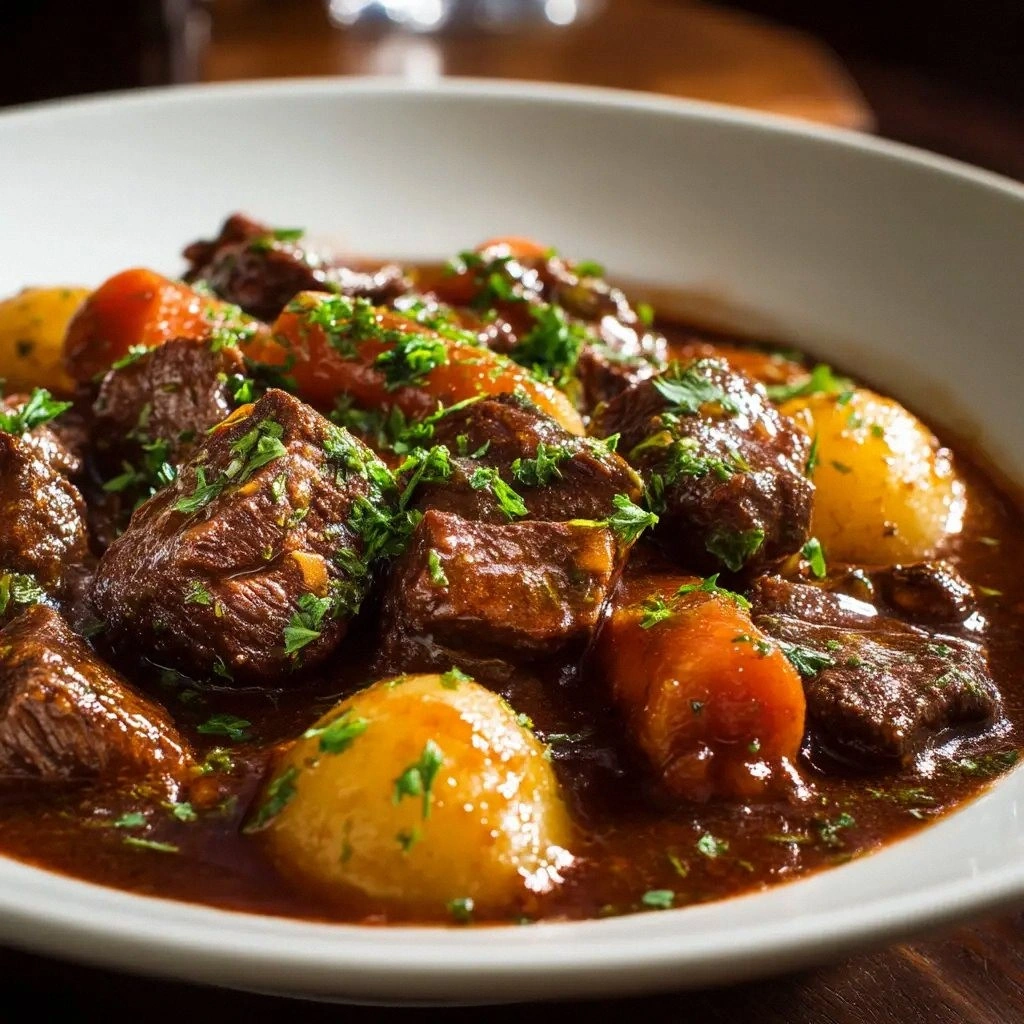
When I first stumbled upon the idea of a slow‑cooked beef stew, it was during a late‑night kitchen debacle that I had forgotten the difference between “simmer” and “simmering” on the stovetop. The pot had been a chaotic swirl of brown meat, raw onions, and a splash of red wine that tasted more like a science experiment than dinner. The result was a mess that left me staring at a pot of half‑cooked beef, wondering if I was making a stew or a culinary disaster. I laughed at myself, but the craving for a comforting, hearty meal lingered like a stubborn echo in my kitchen.
That night, I decided to give the recipe another shot, this time with a deliberate plan: sear the beef, deglaze with wine, and let the slow cooker work its magic. I could already taste the deep, caramelized flavors that would mingle with the earthy sweetness of carrots and potatoes. The aroma that rose from the pot was a warm hug, promising a meal that would turn any bland evening into a cozy gathering. I was already tempted to taste the stew before it was fully cooked, but I dared you to taste this and not go back for seconds.
Fast forward to today, and this version of the Crockpot Beef Stew is hands down the best version you'll ever make at home. The sauce coats the meat like velvet, the vegetables retain their bite, and the final splash of fresh thyme gives the dish a fragrant finish that lingers on the palate. Every bite tells a story of careful seasoning, thoughtful timing, and a little culinary intuition that turns a simple pot of beef into a masterpiece. I’ll be honest — I ate half the batch before anyone else got to try it, and the kitchen still smelled like victory.
The secret sauce? It’s the combination of a quick sear, a splash of dry red wine, and a slow‑cooked finish that allows the flavors to meld without losing depth. Most recipes get this completely wrong, leaving the beef tough or the vegetables mushy. Here’s what actually works: a high‑heat sear, a balanced ratio of broth to wine, and a final thickening that gives the stew a silky texture. I’ll be sharing that technique in detail, so you can replicate it every time.
Picture yourself pulling this out of the oven, the whole kitchen smelling incredible, and a steaming bowl of stew waiting to be ladled over crusty bread. The anticipation is almost tangible; the sound of the first spoonful is music to the ears. I’ve spent countless hours tweaking this recipe, and the result is a dish that feels like a warm hug in a bowl. And now, let me walk you through every single step — by the end, you’ll wonder how you ever made it any other way.
One of the things that sets this recipe apart is the use of a dry red wine that’s not too heavy, just enough to add depth without overpowering the other flavors. The wine’s acidity balances the richness of the beef, creating a harmonious flavor profile that lingers on the tongue. The combination of Worcestershire sauce and tomato paste adds umami and a subtle sweetness that elevates the dish. The result? A stew that is both comforting and sophisticated, perfect for a rainy evening or a special family dinner.
Before we dive into the step‑by‑step instructions, let’s talk about why this version is so special. The ingredients are carefully selected for their quality and flavor, the cooking method ensures tenderness, and the final finish is a silky sauce that clings to every bite. If you’ve ever struggled with a stew that turns out dry or too watery, you’re not alone — and I’ve got the fix. Stay with me here, because this is worth it.
What Makes This Version Stand Out
- Flavor Depth: The combination of red wine, Worcestershire sauce, and tomato paste creates a complex, layered taste that feels both hearty and refined. Each component brings its own character, resulting in a sauce that’s richer than typical slow‑cooked stews.
- Texture Perfection: The beef is seared to develop a caramelized crust before slow cooking, ensuring it stays tender yet flavorful. The vegetables maintain their bite, adding a pleasant contrast to the soft meat.
- Simplicity: Despite the depth of flavor, the recipe requires only a handful of ingredients and minimal prep work. It’s the ultimate comfort food that doesn’t demand a culinary degree.
- Make‑Ahead Friendly: The stew can be cooked in advance and reheated without losing quality, making it ideal for busy weekdays or weekend gatherings.
- Crowd‑Pleaser: The combination of savory, sweet, and aromatic notes makes it a hit with both kids and adults. I’ve had guests ask for the recipe after every dinner.
- Ingredient Quality: Using a good‑quality beef chuck roast and fresh vegetables elevates the dish beyond a generic pot of stew. The quality of each component is reflected in the final flavor.
- Low Effort, High Reward: The slow cooker does most of the work, allowing you to focus on other tasks or simply relax. The end result is a dish that feels like you’ve spent hours in the kitchen.
- Versatile Base: This stew can be adapted to various dietary preferences by swapping in different cuts of meat or adding extra vegetables.
Alright, let's break down exactly what goes into this masterpiece...
Inside the Ingredient List
The Flavor Base
Olive oil is the first ingredient that sets the stage, allowing the beef to brown evenly without sticking. A tablespoon of oil is enough to coat the pan, and the olive oil’s subtle fruity notes complement the red wine. Skipping the oil would result in a soggy sear, losing that essential caramelized flavor.
The Texture Crew
The beef chuck roast is the star, chosen for its marbling that melts into the stew as it cooks. A 3‑pound cut is ideal for four servings, providing generous portions of tender meat. If you’re short on time, a pre‑cut roast from the butcher saves you a few minutes of prep.
The Unexpected Star
Red wine, while not a staple in every stew, adds a depth that’s impossible to replicate with broth alone. The dryness of the wine prevents sweetness from overwhelming the dish, while its tannins help break down the connective tissue in the beef. If you’re not a wine drinker, a splash of dry sherry works as a suitable alternative.
The Final Flourish
Fresh thyme and bay leaves provide a fragrant finish that lingers long after the last bite. The thyme’s subtle minty undertones balance the richness, while the bay leaves contribute a subtle earthiness. If you’re in a pinch, dried thyme works, but fresh is preferable for maximum aroma.
Everything's prepped? Good. Let's get into the real action...
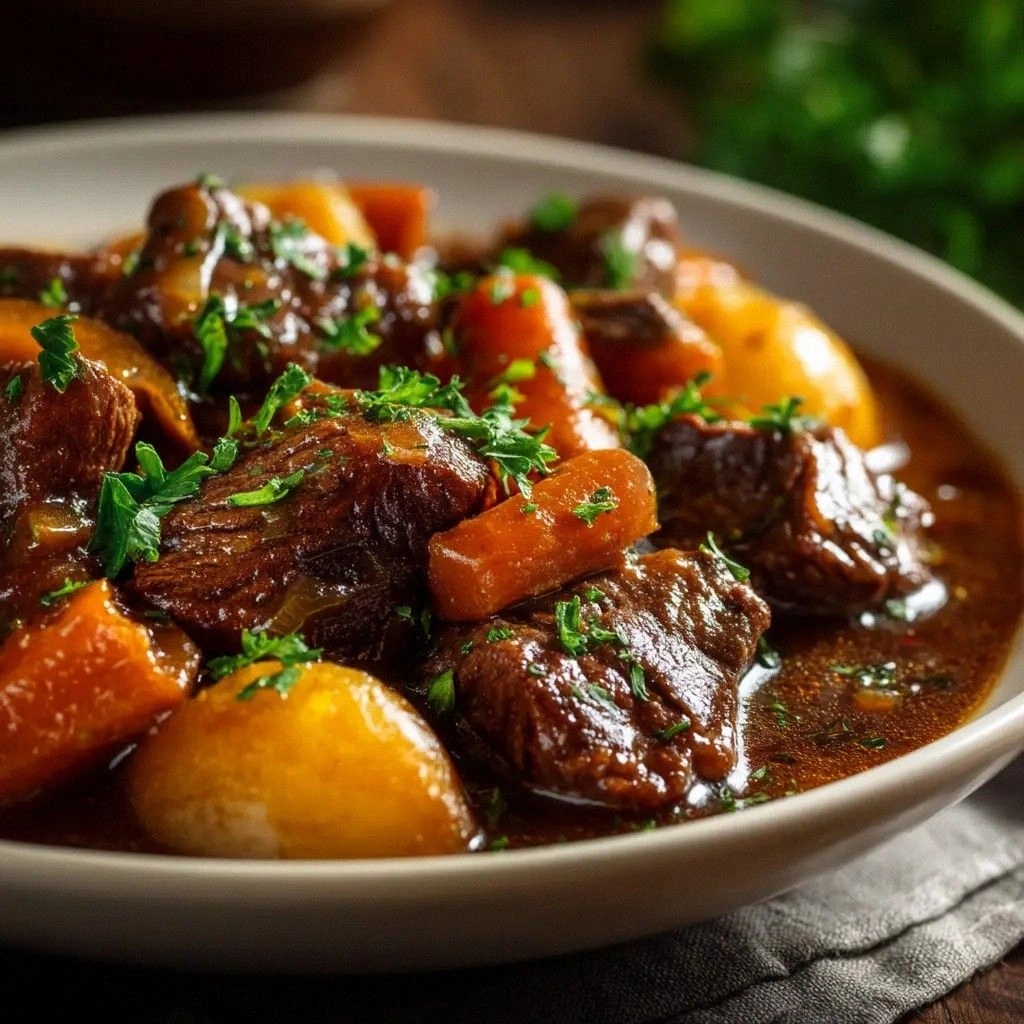
The Method — Step by Step
- Heat a large skillet over medium‑high heat and add 2 tablespoons of olive oil. Let the oil shimmer before adding the beef chunks. This searing step is crucial; it locks in juices and creates a caramelized crust that forms the foundation of the stew’s flavor. Watch the edges start pulling away and turning golden brown.
- Season the beef with 1.5 teaspoons of kosher salt and 1 teaspoon of black pepper. The salt enhances the meat’s natural flavors, while the pepper adds a subtle heat that balances the sweetness of the carrots. Sprinkle the seasoning evenly and give the beef a quick toss to coat.
- Add the beef to the skillet and brown on all sides, about 5–7 minutes. If the pan gets too crowded, work in batches; this ensures a proper sear. The Maillard reaction here is what gives the stew its deep, savory base.
- Transfer the browned beef to the crockpot. Add 1.5 cups of beef broth, 1/2 cup of dry red wine, and 2 tablespoons of Worcestershire sauce. The broth provides moisture, while the wine and Worcestershire add depth and complexity. Stir gently to combine.
- Dice the yellow onion, celery stalks, and carrots, and add them to the pot. The onion provides sweetness, celery adds a subtle crunch, and carrots bring a natural sugar that caramelizes during cooking. This mixture forms the aromatic base of the stew.
- Stir in 2 tablespoons of tomato paste and 4 cloves of minced garlic. The tomato paste thickens the sauce and adds a subtle sweetness, while the garlic delivers a punch of savory flavor. Let the mixture cook for 2 minutes to allow the garlic to mellow.
- Add 1.5 pounds of Yukon Gold potatoes, cut into 1‑inch cubes, along with 2 bay leaves and 2 sprigs of fresh thyme. The potatoes absorb the flavors and provide a comforting heartiness. The bay leaves and thyme infuse the stew with aromatic herbs that elevate the dish.
- Cover the crockpot and cook on low for 8 hours or on high for 4 hours. The slow, steady heat allows the beef to become melt‑in‑your‑mouth tender while the flavors meld into a harmonious whole. The longer cooking time on low gives you a richer, more concentrated taste.
- During the last 30 minutes of cooking, add 1 cup of frozen peas and 3 tablespoons of cornstarch mixed with 3 tablespoons of cold water. This slurry will thicken the stew to a silky consistency without making it gloopy. The peas add a pop of color and a subtle sweetness.
- Give the stew a final stir, taste, and adjust seasoning if necessary. The dish should have a deep, savory flavor with a hint of sweet from the carrots and a fragrant finish from the thyme. Serve hot over crusty bread or mashed potatoes.
That's it — you did it. But hold on, I've got a few more tricks that'll take this to another level...
Insider Tricks for Flawless Results
The Temperature Rule Nobody Follows
Many people think that low is always better for stews, but a short high‑heat finish can actually enhance the flavor. After the stew has cooked on low, briefly increase the heat to high for the last 15 minutes. This caramelizes the surface of the vegetables, adding a subtle crunch and depth that a long low cook alone can’t achieve.
Why Your Nose Knows Best
The aroma of a stew is a reliable indicator of doneness. As the stew cooks, the smell will evolve from sharp, raw meat to a warm, earthy perfume. When the scent feels like a comforting blanket, the stew is ready. Trust your nose; it’s a seasoned chef’s secret weapon.
The 5‑Minute Rest That Changes Everything
Once you turn off the heat, let the stew rest for 5 minutes before serving. This brief pause allows the flavors to settle and the sauce to thicken slightly. I’ve seen people rush into serving, only to find a watery consistency. The rest fixes that.
Fresh vs. Frozen Peas
Using frozen peas is a time‑saving hack that still delivers a bright burst of color. If you prefer fresh peas, blanch them for 30 seconds, then shock them in ice water to preserve their vibrant green hue. Fresh peas add a subtle sweetness that complements the stew’s richness.
Balancing the Acidity
Red wine adds acidity, but if you find the stew too tart, a splash of brown sugar or a pinch of baking soda can neutralize the acidity. Add these in small increments, tasting as you go. A balanced stew feels like a well‑crafted symphony.
Making It Gluten‑Free
To keep the stew gluten‑free, simply omit the cornstarch slurry or replace it with arrowroot powder. The result is just as silky, and the dish remains safe for those with gluten sensitivities.
Creative Twists and Variations
This recipe is a playground. Here are some of my favorite ways to switch things up:
Spicy Chipotle Version
Add a tablespoon of chipotle in adobo sauce for a smoky heat that pairs beautifully with the beef. The chipotle’s smoky undertones add a new dimension, making the stew a crowd‑pleaser for spice lovers.
Herb‑Infused Twist
Replace thyme with rosemary for a piney aroma. The rosemary’s woody notes complement the beef’s richness, creating a comforting yet aromatic stew.
Vegetarian Swap
Use a high‑protein plant‑based beef substitute, add extra mushrooms, and replace the beef broth with vegetable broth. The result is a hearty, vegetarian stew that still delivers on flavor.
Low‑Carb Option
Omit the potatoes and add more zucchini or cauliflower florets. The dish stays low‑carb while maintaining the comforting texture and flavor profile.
Breakfast Stew
Serve the stew over a bed of fluffy scrambled eggs and top with a sprinkle of cheddar cheese. This breakfast variation turns the stew into a protein‑packed, satisfying morning meal.
Instant Pot Upgrade
Follow the same steps but use an Instant Pot on the “Meat/Stew” setting for 35 minutes. The pressure cooking speeds up the process while still delivering a tender, flavorful result.
Storing and Bringing It Back to Life
Fridge Storage
Store the stew in an airtight container for up to 4 days in the refrigerator. The slow‑cooked flavors deepen over time, making leftovers even more delicious. Keep the container sealed to preserve moisture.
Freezer Friendly
Freeze the stew in single‑serving portions for up to 3 months. The beef and vegetables freeze well, and the sauce remains thick and flavorful when thawed. Label each container with the date for easy tracking.
Best Reheating Method
Reheat on the stovetop over medium heat, adding a splash of water or broth to loosen the sauce. Stir frequently to prevent sticking, and let it heat through for 10 minutes. The tiny splash of liquid steams the stew back to perfection.