I still remember the day I ruined my first poke cake. The chocolate base was dry, the peanut butter filling seized up like cement, and the whole thing tasted like a sad cafeteria dessert. I stood there in my kitchen, frosting spatula in hand, wondering how something so simple could go so horribly wrong. Fast forward through three failed attempts, two emergency grocery runs, and one very understanding husband who ate every single "test" batch, and here we are. This Chocolate Peanut Butter Poke isn't just another recipe — it's the result of every single mistake I've ever made in the name of dessert science.
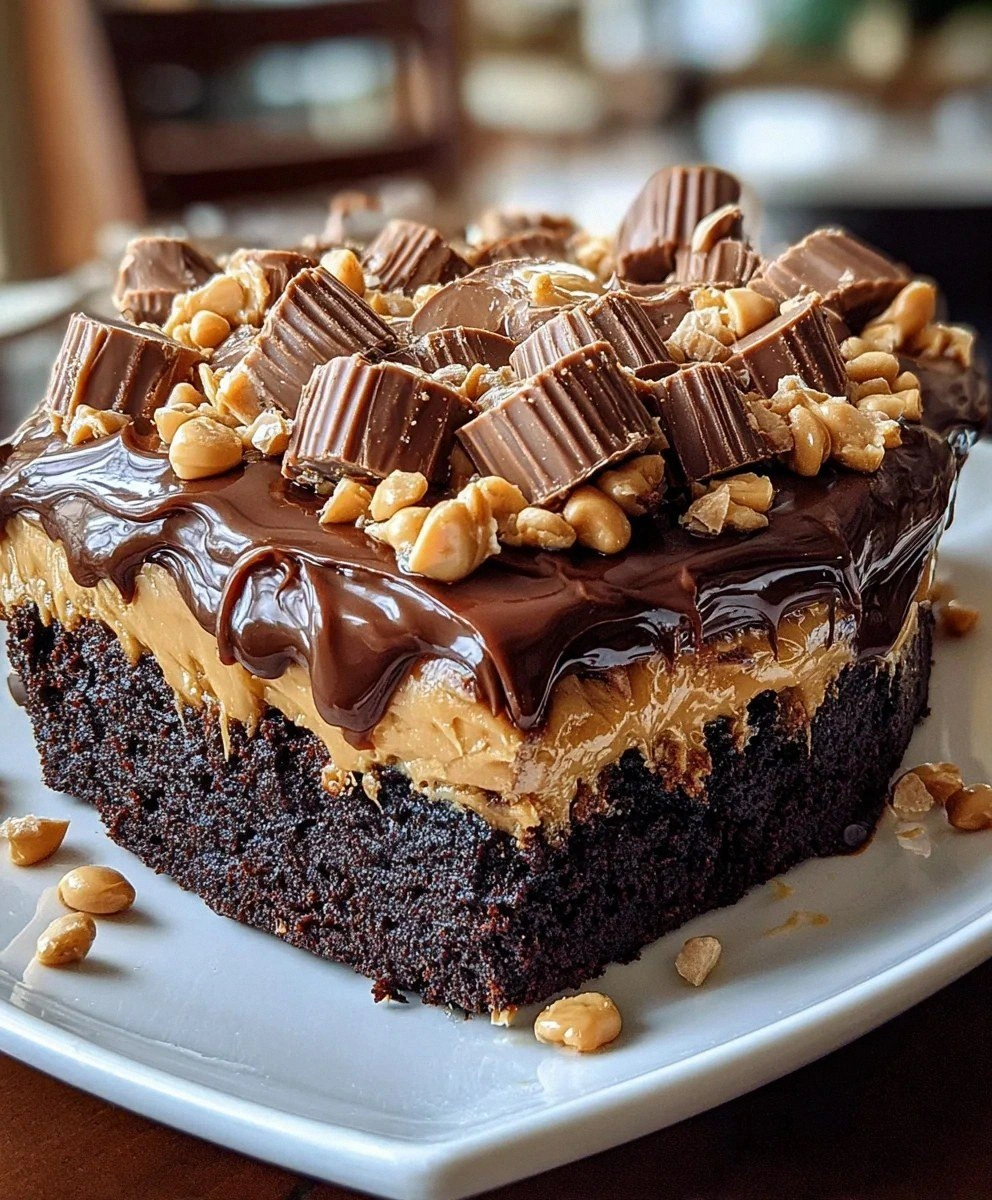
Picture this: it's 11:30 PM on a Tuesday, and I'm standing over the kitchen sink, eating this cake straight from the pan with a fork because I literally cannot stop. The chocolate cake is so moist it practically melts on contact, each forkful delivering rivers of peanut butter that have soaked down into every pocket and crevice. The whipped cream cheese topping sits like a cloud of pure indulgence, studded with chunks of Reese's Cups that give you that perfect textural contrast. That first bite? It's like someone took every good decision you've ever made in your life and wrapped it up in dessert form.
Most poke cakes fail because they treat the "poke" part as an afterthought. They poke, they pour, they hope for the best. But here's what actually works: you need to create channels that are wide enough for the filling to travel down, but not so wide that your cake collapses into itself. You need the filling to be the perfect temperature — warm enough to flow, cool enough to set. And most importantly, you need to understand that peanut butter and sweetened condensed milk are basically magic when they meet heat and time. This recipe gets every single one of these details right.
What makes this version completely different is the technique we'll use to create these flavor highways. Instead of just poking holes randomly, we're going to create a specific pattern that ensures every single bite has the perfect ratio of chocolate to peanut butter. The filling isn't just peanut butter thinned with milk — it's a carefully balanced mixture that starts liquid and sets into this dreamy, fudgy layer that stays soft even when chilled. And the topping? We're making a stabilized whipped cream that's light as air but holds its shape for days. Let me walk you through every single step — by the end, you'll wonder how you ever made it any other way.
What Makes This Version Stand Out
Moisture Magic: This cake stays impossibly moist for up to five days thanks to our peanut butter filling that literally saturates every crumb. While other recipes produce dry edges and soggy centers, ours maintains that perfect tender texture from edge to edge. The secret lies in the timing of when we add our filling and the temperature we serve it at.
Peanut Butter Perfection: Instead of just thinning peanut butter with milk like most recipes, we create a ganache-like filling that sets into a fudgy layer. This means you get distinct pockets of peanut butter that don't just disappear into the cake, but also don't sit on top like an oil slick. Every bite gives you that perfect chocolate-peanut butter marriage.
Structural Integrity: Most poke cakes collapse after the first slice, turning into a sad, weeping mess. Our method creates clean, beautiful slices that hold their shape even when you cut them while cold. The stabilized whipped cream topping acts like edible scaffolding, keeping everything in place.
Make-Ahead Champion: This cake actually gets better after 24 hours in the fridge. The flavors meld, the filling sets perfectly, and the texture becomes even more indulgent. You can make this on Sunday and serve it Friday night with zero loss of quality. Try that with any other dessert and you'll be sadly disappointed.
Crowd Psychology: I've served this to people who claim they "don't like sweets" and watched them go back for thirds. The combination of familiar flavors in an unexpected format triggers all the right nostalgia buttons while still feeling special and new. It's the dessert equivalent of a warm hug from your favorite aunt.
Ingredient Quality Flexibility: While I give you the premium version, this recipe works beautifully with generic brands, sale items, and whatever peanut butter you have in your pantry. The technique is so solid that even with basic ingredients, you'll produce bakery-quality results that make people ask for your secret.
Texture Symphony: We're not just throwing toppings on top. Every element serves a textural purpose: the soft cake, the fudgy filling, the fluffy cream, the crunchy candy pieces. It's like a symphony where every instrument plays in perfect harmony, creating a dessert experience that's greater than the sum of its parts.
Inside the Ingredient List
The Flavor Foundation
Devil's Food Chocolate Cake Mix isn't just a convenient shortcut — it's the backbone of this entire dessert. The rich cocoa content provides the perfect bitter counterpoint to all that peanut butter sweetness, while the mix's built-in leavening gives us the ideal crumb structure for absorbing our filling. Don't go reaching for that generic chocolate mix, though. The "Devil's Food" specification matters here because it contains more cocoa butter, which creates a more tender cake that won't turn to mush when we add our liquid filling. If you're in a pinch and can only find regular chocolate cake mix, add two tablespoons of cocoa powder to the batter, but honestly, just go to another store. Your future self will thank you when you're eating slice after perfect slice.
Creamy Peanut Butter is where most people mess this up completely. They grab natural peanut butter because it seems healthier, but then wonder why their filling separates into an oily mess. Here's the truth: the stabilizers in regular creamy peanut butter are exactly what we need to keep our filling emulsified and luscious. If you're absolutely married to natural peanut butter, you can use it, but you'll need to add a tablespoon of cornstarch to stabilize everything. And please, for the love of dessert, don't use crunchy peanut butter in the filling. Save the texture for the garnish where it can shine without ruining our smooth, flowing filling.
The Texture Crew
Sweetened Condensed Milk is basically liquid gold in dessert form, and it serves multiple crucial roles in this recipe. First, it thins our peanut butter to the perfect consistency for flowing into those poked channels. Second, it adds a caramel-like richness that you simply cannot achieve with regular milk or cream. Third, and this is the game-changer, it contains milk proteins that set slightly when chilled, helping our filling stay in place instead of running all over the plate. When you're shopping, grab the full-fat version — the reduced-fat kind has added water that will dilute your flavors and prevent proper setting.
Instant Vanilla Pudding Mix might seem like an odd addition, but it's our secret weapon for creating that perfect spoon-coating texture. The modified cornstarch in pudding mix activates at a lower temperature than regular cornstarch, meaning it thickens our filling without requiring heat. This is crucial because we want our filling to stay fluid long enough to seep into every hole, but then set up enough to give us clean slices. Plus, the vanilla flavor enhances both the chocolate and peanut butter without competing with either. Generic brands work perfectly here — save your money for good vanilla extract elsewhere.
The Unexpected Star
Whole Milk at room temperature isn't just a suggestion — it's a requirement that will make or break your filling texture. Cold milk will cause your peanut butter to seize up into clumps faster than you can stir them smooth. Hot milk will start cooking your pudding mix, creating lumps that no amount of whisking will fix. Room temperature milk blends smoothly, giving you that perfect silky consistency that flows like lava into your cake. If you forgot to take your milk out of the fridge, just microwave it for 8-10 seconds. You're aiming for around 70°F — it should feel neither cool nor warm when you stick your finger in it.
Cream Cheese needs to be absolutely, completely, totally softened before you even think about starting this recipe. I'm talking leave-it-on-the-counter-for-two-hours soft. If you try to rush this with the microwave, you'll end up with partially melted edges and a cold center that will never incorporate smoothly into your whipped cream. Properly softened cream cheese blends into our topping creating a mousse-like texture that holds its shape for days. Under-softened cream cheese leaves you with little nubbins that taste fine but ruin that cloud-like texture we're after. When in doubt, let it sit longer — you literally cannot over-soften cream cheese.
The Final Flourish
Powdered Sugar does more than just sweeten our cream cheese mixture — it contains cornstarch that helps stabilize our whipped topping, keeping it fluffy and preventing weeping. The ultra-fine texture means it dissolves instantly, preventing any graininess in our final product. When measuring, don't pack it down like brown sugar. Instead, spoon it into your measuring cup and level it off. And if you find yourself out of powdered sugar, you can make your own by blending granulated sugar with a teaspoon of cornstarch, but honestly, just buy the real thing for the smoothest results.
Heavy Whipping Cream with at least 36% milkfat content is non-negotiable for the topping that dreams are made of. The fat content is what allows our cream to whip up into stable peaks that won't collapse under the weight of our other ingredients. Ultra-pasteurized cream works fine, but if you can find locally pasteurized cream, it whips up faster and tastes more luxurious. Keep your cream in the coldest part of your fridge until you're ready to use it — warm cream is the enemy of volume. Pro tip: chill your mixing bowl and whisk in the freezer for 10 minutes before whipping, and you'll achieve stiff peaks in half the time.
Everything's prepped? Good. Let's get into the real action...
The Method — Step by Step
- Start by preheating your oven to 350°F, but don't just trust the dial — use an oven thermometer to confirm the temperature. While the oven heats, grab a 9x13-inch baking pan and spray it with non-stick spray, then line it with parchment paper, leaving an overhang on the long sides. This creates a sling that lets you lift the entire cake out later for cleaner cutting. Mix your Devil's Food cake according to the package directions, but replace the water with whole milk for extra richness. Beat the batter for a full two minutes — this activates the gluten just enough to give us structure without making the cake tough. The batter should be smooth and glossy, falling off your spatula in thick ribbons.
- Pour the batter into your prepared pan and smooth the top with an offset spatula, getting it as level as possible for even baking. Give the pan a few sharp taps on the counter to release any air bubbles that could create holes where our filling could pool unevenly. Slide it into the center of your oven and set a timer for 28 minutes, but start checking for doneness at 25 minutes. The cake is ready when it springs back lightly when touched, and a toothpick inserted in the center comes out with just a few moist crumbs attached. Don't overbake — remember, this cake will continue cooking slightly from residual heat even after you pull it out. The top should be glossy and slightly domed, with edges that have just started to pull away from the sides of the pan.
- While your cake cools, it's time to create our peanut butter filling that will make grown adults weep with joy. In a medium saucepan, combine the creamy peanut butter and sweetened condensed milk over medium-low heat. Stir constantly with a rubber spatula, making sure to scrape the bottom and corners of the pan. You're looking for the mixture to become smooth and glossy, with the consistency of thick hot fudge. This should take about 4-5 minutes — don't rush it with high heat or you'll scorch the peanut butter and create a bitter, grainy mess. When it's ready, the mixture should coat the back of your spatula and drip off in thick, slow ribbons.
- Remove the peanut butter mixture from heat and whisk in the instant vanilla pudding mix until completely smooth and no lumps remain. The pudding mix will start thickening the mixture immediately, so work quickly but thoroughly. Add the room temperature whole milk gradually, whisking constantly to create a pourable consistency that's still thick enough to cling to your whisk. The filling should be warm but not hot — about the temperature of a warm bath. If it's too hot, it will make your cake soggy; too cool and it won't flow into the holes properly. Test the temperature by touching a small drop to your wrist — it should feel warm but not uncomfortable.
- Now comes the moment of truth: poking your cake. Using the back of a wooden spoon, poke holes across the entire surface of your slightly cooled cake, spacing them about 1 inch apart. Press down until you hit the bottom of the pan, but don't go crazy — you want holes, not craters. Work in straight lines across the short side of the pan, then rotate 90 degrees and create a grid pattern. This ensures every bite will have filling, not just the center pieces. The cake should still be warm enough that the spoon goes in easily, but cool enough that it doesn't compress the cake structure.
- Slowly pour your warm peanut butter filling over the entire surface of the poked cake, using a spatula to guide it into all the holes. Don't just dump it in the center — start at one end and work your way across in a zigzag pattern. Use your spatula to gently spread the filling, encouraging it to flow into every hole you've created. You might need to let it sit for a minute between pours to give it time to seep in. Any filling that pools on top will create a glossy, fudgy layer that's absolutely divine. Let the cake sit for 15 minutes to absorb everything, then refrigerate for one hour to set the filling properly.
- For the whipped cream topping, start with your absolutely softened cream cheese in a large mixing bowl. Beat it with an electric mixer on medium speed until it's completely smooth and no lumps remain — this should take about 2-3 minutes of patient mixing. Add the powdered sugar gradually, about half a cup at a time, beating well after each addition. The mixture should become light and fluffy, like a sweet cloud. This step is crucial — if you add all the sugar at once, you'll create a grainy mess that no amount of mixing will fix. Scrape down the sides of the bowl frequently to ensure everything gets incorporated.
- In a separate chilled bowl, beat the heavy whipping cream until it starts to thicken, then add the vanilla extract. Continue beating until soft peaks form — when you lift the beaters, the cream should form peaks that curl over at the tips. Don't overwhip or you'll end up with butter! Gently fold about one-third of the whipped cream into your cream cheese mixture to lighten it, then carefully fold in the remaining whipped cream. Use a rubber spatula and a gentle scooping motion, rotating the bowl as you go. The goal is to maintain as much air as possible while creating a smooth, mousse-like texture that's spreadable but holds its shape.
- Remove your chilled cake from the refrigerator and spread the whipped topping evenly over the surface, creating decorative swirls with your spatula. The topping should be about half an inch thick — enough to provide a creamy counterpoint to the rich filling without overwhelming the cake. For the garnish, drizzle melted peanut butter in thin lines across the top, then drag a toothpick through in the opposite direction to create a chevron pattern. Sprinkle chopped Reese's Cups and Reese's Pieces over the top, pressing them lightly into the cream so they stick. The contrast between the smooth cream, the glossy peanut butter drizzle, and the colorful candy pieces creates a visual impact that matches the incredible flavor.
That's it — you did it. But hold on, I've got a few more tricks that'll take this to another level...
Insider Tricks for Flawless Results
The Temperature Rule Nobody Follows
Room temperature ingredients aren't just a suggestion from persnickety bakers — they're the difference between a smooth, professional-looking dessert and a lumpy disaster. When your cream cheese is properly softened (I'm talking spreadable like butter left on the counter for an hour), it incorporates seamlessly into your whipped topping without leaving tiny nubbins that ruin the texture. Cold peanut butter will seize up when it hits the warm sweetened condensed milk, creating a grainy filling that no amount of stirring will smooth out. Even your eggs for the cake mix should be at room temperature — they incorporate more easily and create better structure. Set everything out on the counter 30 minutes before you start baking, and you'll avoid 90% of the texture issues that plague most home bakers.
Why Your Nose Knows Best
Trust your sense of smell when making this cake — it's more reliable than any timer. When your chocolate cake is perfectly baked, your kitchen will smell like rich, deep cocoa with hints of vanilla. If you start smelling something sharp or burnt, you've gone too far. The peanut butter filling is ready when it smells like the inside of a Reese's Cup factory — warm, nutty, and sweet. And here's a trick: if your whipped cream starts to smell slightly sweet and dairy-fresh, it's at the perfect soft-peak stage. Overwhipped cream takes on a slightly buttery scent that's your cue to stop immediately. A friend tried skipping this sensory check once — let's just say her cake tasted fine but the texture resembled chocolate-scented cardboard.
The 5-Minute Rest That Changes Everything
After you pour the peanut butter filling over your poked cake, walk away for exactly five minutes. Don't poke, don't prod, don't try to spread it around. This rest period allows capillary action to work its magic, pulling the filling down into all those channels you've created. When you come back, you'll see the filling has distributed itself more evenly than any spatula work could achieve. Use this time to clean up your workspace or start on the whipped topping. This tiny pause prevents the top of your cake from becoming a soggy mess while ensuring the interior gets properly saturated. It's these micro-adjustments that separate good bakers from great ones.
The Overnight Advantage
This cake tastes good on day one, but it becomes legendary after 24 hours in the fridge. During this time, the flavors meld and deepen, the filling sets to the perfect fudgy consistency, and the whole dessert transforms from separate components into a unified flavor experience. The chocolate cake absorbs just enough of the peanut butter filling to become ultra-moist without getting soggy. The whipped topping firms up slightly, making the cake easier to slice cleanly. If you can resist, make this a day ahead of when you need it — your future self will thank you when you're pulling out a dessert that tastes like it came from a professional bakery.
Creative Twists and Variations
This recipe is a playground. Here are some of my favorite ways to switch things up:
The Buckeye Blitz
Replace half the peanut butter in the filling with equal parts Nutella for a chocolate-hazelnut twist that tastes like the inside of a gourmet candy. Top with chopped roasted hazelnuts instead of Reese's Pieces for a more sophisticated crunch. The hazelnut-chocolate combination elevates this from childhood favorite to grown-up indulgence, perfect for dinner parties where you want to impress without trying too hard. The filling becomes even fudgier, with a depth of flavor that makes people close their eyes involuntarily when they taste it.
The Salty Sweet Sensation
Add a teaspoon of flaky sea salt to the peanut butter filling and swap out the vanilla pudding mix for butterscotch. The salt amplifies both the chocolate and peanut butter flavors while the butterscotch adds a caramel note that makes this taste like a Snickers bar in cake form. Garnish with crushed pretzels for that perfect salty crunch that keeps people coming back for "just one more bite" until the whole pan disappears. This version is dangerously addictive — I once watched my brother-in-law eat half the pan standing at the kitchen counter.
The Elvis Edition
Stir a mashed ripe banana into your peanut butter filling for that classic Elvis flavor combination. Replace the vanilla extract in the whipped topping with banana extract (use sparingly — 1/4 teaspoon max) and garnish with crumbled bacon that's been candied in brown sugar. Sounds weird, tastes incredible. The banana adds moisture and a tropical note that pairs surprisingly well with the rich chocolate cake. This version is always the first to disappear at potlucks, usually with people asking for the recipe while still chewing.
The Dark Side
Use dark chocolate cake mix and natural peanut butter for a more grown-up, less sweet version. Add two tablespoons of cocoa powder to the filling and use dark chocolate Reese's Thins for garnish. The result is intensely chocolatey with a more pronounced peanut flavor that isn't masked by excess sugar. This version pairs beautifully with coffee or a glass of cold milk. My chocolate-snobby friend who claims to hate "too sweet" desserts requests this for every birthday — high praise from someone who usually turns down cake.
The Holiday Helper
Add a teaspoon of cinnamon and a pinch of cayenne to your chocolate cake mix for a Mexican hot chocolate vibe. Swap the vanilla pudding for white chocolate and add a teaspoon of orange zest to the filling. Garnish with candied orange peel and silver dragées for a dessert that looks as festive as it tastes. This version saved my bacon last Christmas when I needed something that felt special but could be made ahead. The subtle warmth from the spices makes this perfect for winter gatherings, and the orange adds a brightness that cuts through all that richness.
The Kid-Friendly Funfetti
Use Funfetti cake mix instead of chocolate (I know, I know, but hear me out) and add rainbow sprinkles to the peanut butter filling. Kids go absolutely nuts for this version, and honestly, so do adults when they're feeling nostalgic. The peanut butter tames the sweetness of the Funfetti base, while the colorful sprinkles add a party vibe that makes this perfect for birthdays. Top with whipped cream that's been tinted with a drop of food coloring and more sprinkles. It's like a peanut butter and jelly sandwich had a baby with birthday cake, and somehow it works beautifully.
Storing and Bringing It Back to Life
Fridge Storage
Wrap your finished cake tightly in plastic wrap, pressing it directly against the surface of the whipped topping to prevent it from forming a skin. Store in the coldest part of your fridge, not in the door where temperature fluctuations can cause the filling to weep. Properly stored, this cake stays magnificent for up to 5 days, though I've never seen one last that long. The flavors actually improve after the first 24 hours as everything melds together into dessert harmony. If you notice any condensation on the surface when you unwrap it, just gently blot it away with a paper towel — this is normal and won't affect the taste or texture.
Freezer Friendly
This cake freezes beautifully, making it perfect for emergency dessert situations. Cut it into individual portions and wrap each piece tightly in plastic wrap, then aluminum foil. Freeze for up to 2 months — any longer and the texture starts to suffer. When you're ready to serve, transfer a portion to the fridge overnight to thaw slowly. The key is patience here — trying to rush the thawing process in the microwave will give you a soggy, separated mess. Once thawed, let it sit at room temperature for 30 minutes before serving for the best texture. The filling might be slightly firmer than fresh, but the flavor is every bit as incredible.
Best Reheating Method
Here's the thing — this cake is meant to be served cold, straight from the fridge. But if you've stored individual slices and want that just-made freshness back, here's what works: let a slice sit at room temperature for 15-20 minutes to take the chill off. This brings back all those complex flavors that get muted when cold. If you must warm it (and honestly, try it cold first), use a low oven at 200°F for just 5-7 minutes. Any warmer and your whipped topping will weep and your filling will become too loose. A quick 10-second zap in the microwave works in emergencies, but use 50% power and watch it like a hawk — you're just taking the chill off, not warming it through.