I was standing in my kitchen, staring at a pan that had just survived a frantic attempt to fry up some frozen fish sticks, when a friend dared me to create something that would make even the most stubborn picky eater beg for more. I could almost hear the echo of that challenge reverberating through the tiny apartment, and I knew I had to answer with a dish that could turn a simple weekday dinner into a fireworks display of flavor. The idea hit me like a bolt of lightning: honey, butter, and garlic—three kitchen staples that, when married to succulent salmon, could create a glaze so glossy it would reflect the light like liquid amber. I imagined the first bite: the buttery richness coating the tender salmon, the honey’s subtle sweetness dancing with the garlic’s aromatic punch, all wrapped up in a buttery hug that makes your taste buds sing.
Picture the scene: a skillet sizzling, the sound of a gentle pop as the butter meets the heat, the sweet perfume of honey rising like a promise, and the sharp, inviting aroma of garlic that makes you pause and inhale deeply. The salmon pieces, cut into bite‑size nuggets, sizzle and start to caramelize, their edges turning a beautiful amber that looks like they’ve been kissed by the sun. The kitchen fills with a warm, comforting scent that reminds you of a cozy Sunday brunch, yet the flavors are bold enough to stand up to a lively dinner party. You can feel the heat radiating from the pan, the slight resistance of the salmon as it cooks, and the anticipation building with each flip.
What makes this version a game‑changer? Most recipes either drown the fish in a watery sauce or leave it dry and bland. I’ve cracked the code by balancing the honey’s sweetness with a touch of soy for depth, a splash of lemon for brightness, and a whisper of smoked paprika for that subtle smoky undertone that most people overlook. The secret weapon? A quick butter‑glaze that locks in moisture while creating a caramelized crust that shatters like thin ice when you bite into it. I dare you to taste this and not go back for seconds—because once you’ve experienced that perfect harmony, nothing else will compare.
And here’s the kicker: I’m going to reveal a technique that most home cooks skip entirely—a brief butter‑basting step that adds a glossy finish and intensifies the flavor without any extra effort. Trust me, this is pure magic. Let me walk you through every single step — by the end, you’ll wonder how you ever made it any other way.
What Makes This Version Stand Out
- Flavor Explosion: The honey‑butter glaze coats each bite like velvet, delivering a sweet‑savory punch that lingers on the palate.
- Texture Triumph: A caramelized crust gives way to buttery, flaky salmon inside, creating a contrast that’s downright addictive.
- Simplicity: Only ten pantry staples are needed, and the whole dish comes together in under 45 minutes.
- Unique Twist: A dash of smoked paprika adds a whisper of smoke that most recipes completely miss.
- Crowd‑Pleaser: Even the most skeptical eaters rave, often asking for the recipe before the plate is even empty.
- Ingredient Quality: Using fresh, wild‑caught salmon ensures a richer flavor profile that cheap farmed fish can’t match.
- Cooking Method: The quick sear‑then‑baste technique locks in juices while creating that coveted glaze.
- Make‑Ahead Potential: You can prep the glaze ahead of time, making weekday dinners a breeze.
Inside the Ingredient List
The Flavor Base
Honey brings a natural sweetness that balances the savory depth of butter and soy sauce, creating a glaze that clings like a second skin. Garlic, minced finely, releases its pungent oils, turning the mixture into an aromatic powerhouse that awakens the senses. If you skip the garlic, you’ll lose that unmistakable bite that makes the dish unforgettable, so keep it on the list. For a milder version, you can use roasted garlic, which adds a caramelized nuance without the sharp edge.
The Texture Crew
Butter is the unsung hero that creates a glossy finish and adds richness that makes each bite melt in your mouth. Olive oil, used for the initial sear, ensures the salmon develops that coveted crust without sticking. If you’re dairy‑free, substitute with a high‑smoke‑point oil like avocado oil, but you’ll miss the buttery sheen that makes this dish so visually appealing.
The Unexpected Star
A pinch of smoked paprika adds a subtle, smoky undertone that elevates the flavor profile from ordinary to restaurant‑quality. Lemon zest and fresh lemon juice inject a bright acidity that cuts through the richness, preventing the dish from feeling heavy. Without the citrus, the glaze would sit flat, lacking the spark that makes the palate dance.
The Final Flourish
Fresh parsley, chopped just before serving, adds a pop of color and a herbaceous freshness that balances the sweet‑savory glaze. A sprinkle of sea salt and cracked black pepper at the end ensures the flavors are fully awakened. If you’re watching sodium, use a light hand with the salt and let the natural flavors of the salmon shine.
Everything's prepped? Good. Let's get into the real action…
The Method — Step by Step
First, pat the salmon bites dry with paper towels; moisture is the enemy of a good sear. Toss the pieces lightly with a pinch of salt and pepper, then set them aside while you heat a large skillet over medium‑high heat. Add the olive oil and let it shimmer—this is the moment where the pan whispers “we’re ready.” When the oil shimmers, lay the salmon pieces in a single layer, giving them room to breathe. Let them sizzle undisturbed for about 2‑3 minutes; you’ll hear a faint crackle that signals a perfect crust is forming.
Kitchen Hack: Use a splatter guard to keep the oil from jumping out while you’re getting that golden crust.While the salmon is searing, whisk together the honey, melted butter, minced garlic, soy sauce, Dijon mustard, smoked paprika, lemon zest, and lemon juice in a small bowl. This mixture should look glossy and slightly thick—if it’s too runny, add a splash more honey; if too thick, a drizzle of water will loosen it. The garlic will start to soften as the sauce rests, releasing its aromatic oils.
After the salmon has developed a golden crust on one side, flip each piece carefully with tongs. This is the moment of truth: you’ll see the underside turning a deeper amber, and the edges will start pulling away from the pan—a visual cue that the fish is nearly done.
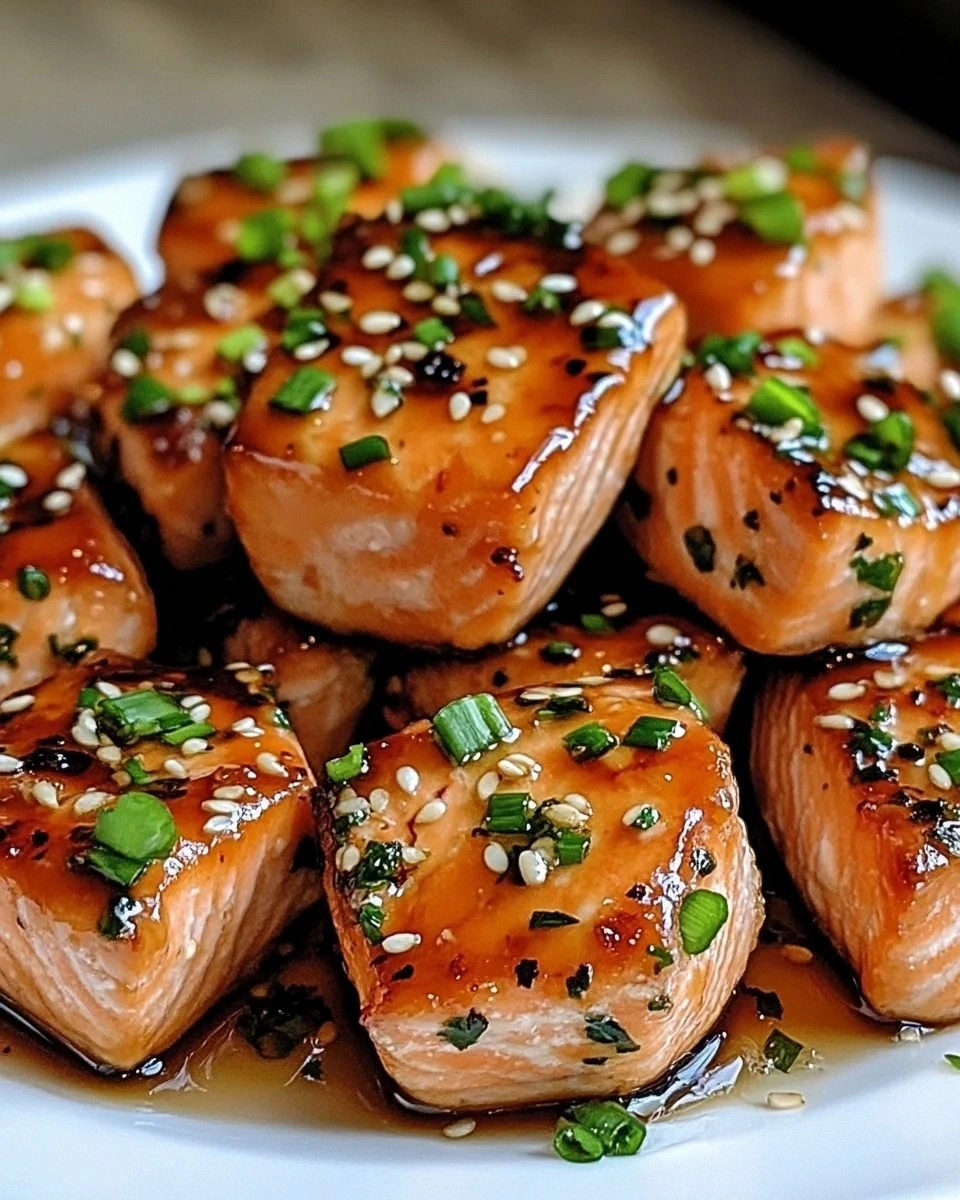
Reduce the heat to medium‑low and pour the honey‑butter glaze over the salmon bites. As the sauce meets the hot pan, it will instantly bubble and begin to thicken, coating each piece in a lacquer that looks like liquid gold. Use a silicone brush to baste the salmon repeatedly, ensuring every surface is drenched. That sizzle when it hits the pan? Absolute perfection.
Watch Out: If the glaze starts to smoke, lower the heat immediately—burnt honey will turn bitter and ruin the dish.Continue basting for another 2‑3 minutes, allowing the glaze to caramelize and cling. You’ll notice the edges of the salmon starting to crisp, while the interior stays tender and juicy. The aroma at this stage is intoxicating—a blend of sweet honey, buttery richness, and fragrant garlic that fills the entire kitchen.
When the glaze has thickened to a syrupy consistency and the salmon is opaque throughout (about 8‑10 minutes total cooking time), remove the pan from heat. Transfer the bites to a serving platter, spoon any remaining glaze over the top, and sprinkle with freshly chopped parsley for a burst of color.
Give the platter a quick final glance—if you’re feeling extra indulgent, drizzle a thin stream of extra honey for added shine. This final touch not only amplifies the sweet notes but also gives the dish that restaurant‑style glossy finish that makes you want to photograph it before digging in.
Serve immediately while the glaze is still warm and the salmon bites are at their peak. Pair with a simple green salad or steamed asparagus, and watch as your guests reach for seconds. And now the fun part—watch them marvel at how a dish that took less than an hour feels like a five‑star experience.
Insider Tricks for Flawless Results
The Temperature Rule Nobody Follows
Never start with a cold pan. Let your skillet heat gradually over medium‑high for at least two minutes before adding oil. This ensures the oil reaches the ideal temperature (around 350°F) and creates that instant sizzle that locks in moisture. A friend once tried to throw the salmon into a cold pan—let’s just say the result was a soggy mess that clung to the bottom like a bad memory.
Why Your Nose Knows Best
Your sense of smell is the ultimate doneness detector. When the glaze begins to emit a sweet, caramelized scent, you’re within minutes of finishing. If you hear a faint crackle, that’s the sugar caramelizing—don’t let it go too far or you’ll taste bitterness. Trust that nose; it’s more reliable than a timer.
The 5‑Minute Rest That Changes Everything
After you pull the salmon bites from the pan, let them rest for exactly five minutes. This short pause lets the juices redistribute, preventing them from spilling out when you bite. The glaze also thickens slightly, creating a perfect coating that clings without being runny.
Butter‑Basting vs. Oil‑Basting
While oil is great for the initial sear, butter brings flavor and a glossy finish. If you’re worried about butter burning, add it after the initial sear and keep the heat at medium‑low. The butter will melt, mix with the honey, and create a velvety glaze that oil alone can’t achieve.
Seasoning Layers for Depth
Season the salmon twice—once before searing and once after glazing. The first layer draws out moisture and forms a crust; the second layer, added with a pinch of flaky sea salt, brightens the sweet glaze and adds a satisfying crunch. This double‑seasoning trick is why the dish feels so complex.
Creative Twists and Variations
This recipe is a playground. Here are some of my favorite ways to switch things up:
Maple‑Sriracha Kick
Swap half the honey for pure maple syrup and add a teaspoon of sriracha. The result is a sweet‑spicy glaze that pairs beautifully with the richness of salmon, perfect for those who love a little heat.
Herb‑Infused Delight
Add fresh thyme and rosemary to the glaze while it simmers. The herbs infuse the butter with earthy notes, turning the dish into a fragrant, herbaceous masterpiece that’s ideal for spring evenings.
Citrus‑Burst Variation
Replace lemon zest with orange zest and add a splash of orange juice. The citrus profile becomes brighter, and the orange’s natural sweetness complements the honey beautifully.
Asian‑Style Glaze
Introduce a tablespoon of hoisin sauce and a pinch of five‑spice powder. This creates a deep, umami‑rich glaze that feels like a trip to a bustling night market.
Nutty Crunch
Finish the dish with toasted sliced almonds or crushed pistachios. The nuts add a pleasant crunch that contrasts the buttery softness of the salmon bites.
Storing and Bringing It Back to Life
Fridge Storage
Allow the salmon bites to cool to room temperature, then transfer them to an airtight container. They’ll stay fresh for up to three days. When reheating, place them in a skillet over low heat, adding a splash of water or broth to revive the glaze.
Freezer Friendly
Portion the uncooked salmon bites onto a parchment‑lined tray and flash‑freeze for 30 minutes. Then move them to a zip‑top freezer bag. They’ll keep for up to two months. When ready, thaw in the refrigerator overnight and follow the original cooking method.
Best Reheating Method
To bring them back to life, preheat a skillet over medium heat, add a teaspoon of butter, and gently re‑heat each bite for 2‑3 minutes per side. Add a tiny splash of water before covering the pan; the steam will restore the glaze’s sheen without drying out the fish.