
Thai Tom Yum Noodle Soup
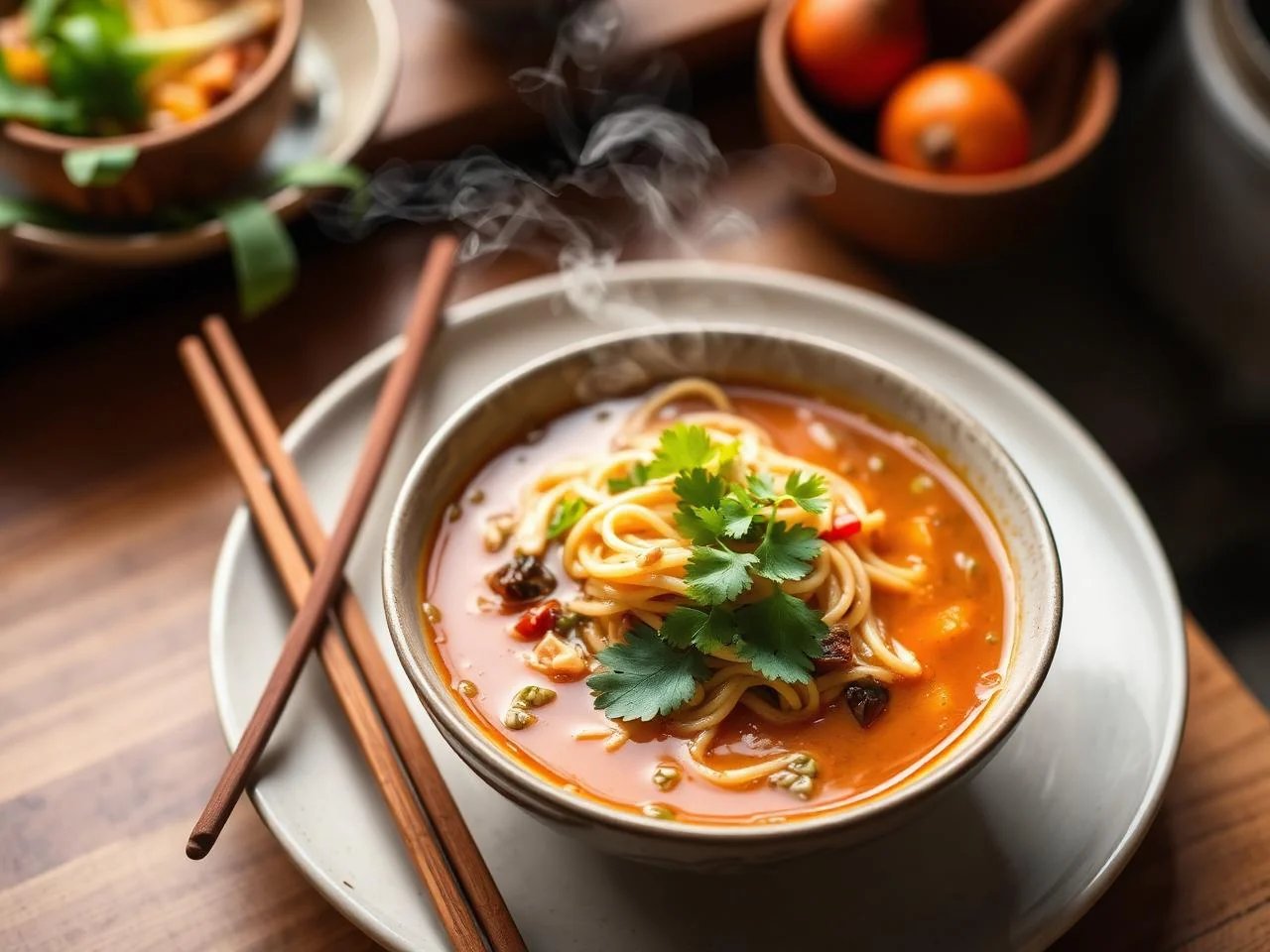
I still remember the first time I tasted Thai Tom Yum Noodle Soup - it was like a symphony of flavors on my palate. The combination of spicy, sour, sweet, and umami notes was absolutely captivating. Since then, I've been on a mission to perfect my own recipe for this beloved dish. After months of experimentation and refinement, I'm excited to share my version of Thai Tom Yum Noodle Soup with you.
This recipe is a labor of love, and I've taken great care to ensure that every component is authentic and delicious. From the fragrant aromatics to the rich and creamy broth, every element is designed to transport your taste buds to the bustling streets of Bangkok.
One of the things that sets this recipe apart is the use of high-quality ingredients. I've specified the exact quantities and types of ingredients you'll need, so you can trust that your dish will turn out perfectly. Whether you're a seasoned cook or just starting out, this recipe is designed to be approachable and easy to follow.
So why make Thai Tom Yum Noodle Soup at home? For one, it's a great way to customize the dish to your taste preferences. You can adjust the level of spiciness, add your favorite protein or vegetables, and experiment with different types of noodles. Plus, homemade Tom Yum is often healthier and more flavorful than store-bought or restaurant versions.
In this recipe, I'll guide you through every step of the process, from preparing the aromatics to serving the finished dish. I'll also share some expert tips and variations to help you take your Tom Yum game to the next level. So let's get started and dive into the wonderful world of Thai cuisine!
Why You’ll Love This Recipe
- This recipe is easy to make and requires minimal ingredients
- It's a great way to customize the dish to your taste preferences
- The broth is rich and flavorful, with a delicate balance of sweet, sour, salty, and umami notes
- You can add your favorite protein or vegetables to make the dish more substantial
- It's a healthy and flavorful alternative to store-bought or restaurant versions
- You can make it ahead of time and refrigerate or freeze it for later use
- It's a great way to experiment with different types of noodles and ingredients
Why This Recipe Works
The key to a great Thai Tom Yum Noodle Soup is balance and harmony. The broth should be rich and flavorful, with a delicate balance of sweet, sour, salty, and umami notes. To achieve this, I've used a combination of aromatics like lemongrass, galangal, and shallots, which are sautéed in oil to bring out their natural sweetness.
The protein - in this case, chicken - is cooked separately and then added to the broth, where it absorbs all the delicious flavors. I've also used a variety of mushrooms, including button and cremini, which add texture and depth to the dish.
One of the most important components of Tom Yum is the broth itself. I've used a combination of chicken stock, coconut milk, and fish sauce to create a rich and creamy base. The coconut milk adds a luxurious texture, while the fish sauce provides a salty, umami flavor that's essential to the dish.
Finally, the noodles are cooked separately and then added to the broth, where they absorb all the delicious flavors. I've used rice noodles, which are a classic choice for Tom Yum. They're light, delicate, and pair perfectly with the rich and spicy broth.
Ingredients You’ll Need
When it comes to making Thai Tom Yum Noodle Soup, the quality of the ingredients is crucial. You'll need a variety of aromatics, including lemongrass, galangal, and shallots, as well as protein, mushrooms, and noodles. I've specified the exact quantities and types of ingredients you'll need, so you can trust that your dish will turn out perfectly.
One of the most important ingredients in Tom Yum is the broth. I've used a combination of chicken stock, coconut milk, and fish sauce to create a rich and creamy base. You can find these ingredients at most Asian markets or online.
- 2 tablespoons vegetable oilUse a neutral-tasting oil with a high smoke point, such as canola or grapeseed oil
- 4 cloves garlic, mincedFresh garlic is essential for the flavor of the dish, so try to use the freshest cloves you can find
- 2 inches lemongrass, bruisedLemongrass is a key ingredient in Tom Yum, and it's essential to bruise it to release its oils and flavor
- 2 inches galangal, slicedGalangal is a type of ginger that's commonly used in Thai cuisine, and it adds a unique flavor to the dish
- 1 pound boneless, skinless chicken breast or thighsYou can use either chicken breast or thighs for this recipe, depending on your preference
- 2 cups mixed mushrooms, slicedI've used a combination of button and cremini mushrooms, but you can use any type of mushroom you like
- 4 cups chicken stockUse a low-sodium chicken stock to avoid over-salting the dish
- 1 cup coconut milkFull-fat coconut milk is essential for the creamy texture of the broth
- 2 tablespoons fish sauceFish sauce is a key ingredient in Tom Yum, and it adds a salty, umami flavor to the dish
- 1 tablespoon lime juiceFresh lime juice is essential for the flavor of the dish, so try to use the freshest limes you can find
- 1 teaspoon grated gingerFresh ginger is essential for the flavor of the dish, so try to use the freshest ginger you can find
- 1/2 teaspoon saltUse a flaky, kosher-style salt to add depth and texture to the dish
- 1/4 teaspoon black pepperFreshly ground black pepper is essential for the flavor of the dish, so try to use the freshest peppercorns you can find
- 8 ounces rice noodlesRice noodles are a classic choice for Tom Yum, and they pair perfectly with the rich and spicy broth
Equipment You’ll Need
How to Make Thai Tom Yum Noodle Soup
- 1Heat the oil in a large pot or Dutch oven over medium-high heat until it reaches 350°F on an instant-read thermometer
- 2Add the minced garlic and cook for 1-2 minutes, until fragrant and lightly browned
- 3Add the bruised lemongrass and sliced galangal and cook for 1-2 minutes, until fragrant
- 4Add the chicken and cook until browned on all sides and cooked through, about 5-7 minutes
- 5Add the mixed mushrooms and cook until they release their liquid and start to brown, about 3-5 minutes
- 6Add the chicken stock, coconut milk, fish sauce, lime juice, grated ginger, salt, and black pepper, and stir to combine
- 7Bring the mixture to a boil, then reduce the heat to low and simmer for 10-15 minutes, until the flavors have melded together and the soup has thickened slightly
- 8Cook the rice noodles according to the package instructions and drain well
- 9Add the cooked noodles to the pot and stir to combine
- 10Taste and adjust the seasoning as needed, then serve hot
Expert Tips
- Use a variety of mushrooms for added texture and flavor
- Don't overcook the noodles, as they can become mushy and unappetizing
- Add the noodles to the pot just before serving, as they can absorb too much of the broth if left to sit
- Use a high-quality fish sauce for the best flavor
- Don't be afraid to experiment with different types of protein or vegetables to make the dish your own
- Make the broth ahead of time and refrigerate or freeze it for later use
- Add a squeeze of fresh lime juice just before serving for added brightness and flavor
- Garnish with fresh herbs, such as basil or cilantro, for added flavor and visual appeal
Common Mistakes to Avoid
- Overcooking the noodles, which can make them mushy and unappetizing
- Not using a high-quality fish sauce, which can result in a bland or uninspired flavor
- Not adjusting the seasoning to taste, which can result in a dish that's too salty or too bland
- Not using a variety of mushrooms, which can result in a dish that's lacking in texture and flavor
- Not cooking the chicken thoroughly, which can result in foodborne illness
- Not using fresh and high-quality ingredients, which can result in a dish that's lacking in flavor and texture
Variations and Substitutions
- Add other types of protein, such as shrimp or tofu, for added variety
- Use different types of noodles, such as egg noodles or udon, for a change of pace
- Add other vegetables, such as bell peppers or carrots, for added flavor and nutrition
- Use different types of broth, such as beef or vegetable broth, for a change of flavor
- Add a splash of coconut cream for added richness and creaminess
- Use fresh herbs, such as basil or cilantro, for added flavor and visual appeal
- Make the dish spicy by adding more chili flakes or sliced jalapenos
What to Serve With Thai Tom Yum Noodle Soup
Serve the Thai Tom Yum Noodle Soup hot, garnished with fresh herbs and a sprinkle of toasted peanuts or sesame seeds. You can also serve it with a side of steamed vegetables or a green salad for added nutrition and flavor.
Some other ideas for serving the dish include:
Make-Ahead, Storage, Freezing and Reheating
The Thai Tom Yum Noodle Soup can be made ahead of time and refrigerated or frozen for later use. To refrigerate, simply cool the soup to room temperature, then transfer it to an airtight container and refrigerate for up to 3 days.
To freeze, cool the soup to room temperature, then transfer it to an airtight container or freezer bag and freeze for up to 3 months. To reheat, simply thaw the soup overnight in the refrigerator, then reheat it over low heat until warmed through.
When reheating the soup, be careful not to overheat it, as this can result in a loss of flavor and texture. Instead, reheat it gently over low heat, stirring occasionally, until warmed through.
Some other tips for storing and reheating the soup include:
Frequently Asked Questions
What type of noodles should I use for Thai Tom Yum Noodle Soup?
Rice noodles are a classic choice for Tom Yum, but you can also use other types of noodles, such as egg noodles or udon, for a change of pace
Can I make the broth ahead of time?
Yes, the broth can be made ahead of time and refrigerated or frozen for later use
What type of protein should I use for the dish?
You can use a variety of proteins, such as chicken, shrimp, or tofu, for the dish
Can I add other vegetables to the dish?
Yes, you can add other vegetables, such as bell peppers or carrots, to the dish for added flavor and nutrition
How spicy should the dish be?
The level of spiciness is up to personal preference, but you can add more chili flakes or sliced jalapenos to make the dish spicier
Can I serve the dish with other sides?
Yes, you can serve the dish with a variety of sides, such as steamed vegetables or a green salad, for added nutrition and flavor
How do I store and reheat the soup?
The soup can be refrigerated or frozen for later use, and reheated gently over low heat until warmed through
Can I make the dish vegetarian or vegan?
Yes, you can make the dish vegetarian or vegan by substituting the chicken with tofu or other plant-based protein sources, and using vegetable broth instead of chicken broth
Ingredients
- 2 tablespoons vegetable oil
- 4 cloves garlic, minced
- 2 inches lemongrass, bruised
- 2 inches galangal, sliced
- 1 pound boneless, skinless chicken breast or thighs
- 2 cups mixed mushrooms, sliced
- 4 cups chicken stock
- 1 cup coconut milk
- 2 tablespoons fish sauce
- 1 tablespoon lime juice
- 1 teaspoon grated ginger
- 1/2 teaspoon salt
- 1/4 teaspoon black pepper
- 8 ounces rice noodles
Instructions
- Heat the oil in a large pot or Dutch oven over medium-high heat until it reaches 350°F on an instant-read thermometer
- Add the minced garlic and cook for 1-2 minutes, until fragrant and lightly browned
- Add the bruised lemongrass and sliced galangal and cook for 1-2 minutes, until fragrant
- Add the chicken and cook until browned on all sides and cooked through, about 5-7 minutes
- Add the mixed mushrooms and cook until they release their liquid and start to brown, about 3-5 minutes
- Add the chicken stock, coconut milk, fish sauce, lime juice, grated ginger, salt, and black pepper, and stir to combine
- Bring the mixture to a boil, then reduce the heat to low and simmer for 10-15 minutes, until the flavors have melded together and the soup has thickened slightly
- Cook the rice noodles according to the package instructions and drain well
- Add the cooked noodles to the pot and stir to combine
- Taste and adjust the seasoning as needed, then serve hot