Picture this: it’s a rainy Tuesday, the clock is ticking toward dinner, and you’re staring at an empty fridge that feels like a culinary void. I tried to make a quick stir‑fry, but the sauce turned into a sticky, bland mess that tasted like regret. That night, I remembered a friend’s rave about tikka masala chicken pasta and decided to give it a shot. The result? A dish that feels like a warm hug, yet bursts with vibrant, smoky flavors that made my kitchen smell like a spice‑filled dream.
I was skeptical at first. I’d never seen pasta and tikka masala together, and the idea of mixing creamy sauce with aromatic spices sounded like a culinary experiment gone wrong. But as soon as the chicken hit the pan and the sauce started to caramelize, the kitchen filled with the intoxicating scent of cumin, coriander, and toasted garlic. The sizzle was audible, the colors a deep, ruby red that made my eyes water in the best possible way. And then the pasta arrived, perfectly al dente, ready to soak up that velvety sauce.
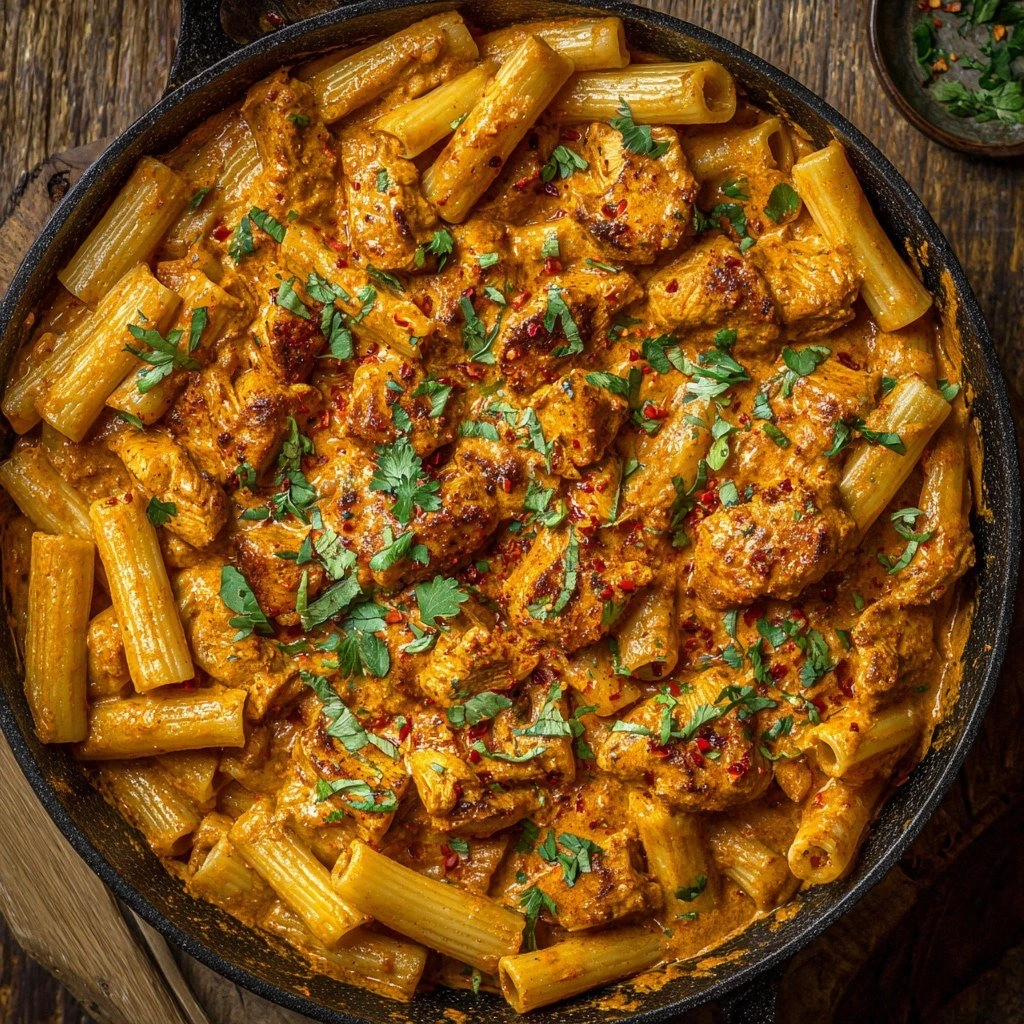
What makes this version stand out is that it’s not just a fusion dish; it’s a carefully orchestrated symphony of textures and flavors. The chicken is marinated to lock in moisture, the sauce balances heat and creaminess, and the pasta acts as the perfect canvas. The result is a dish that feels both indulgent and comforting, with a depth that keeps you coming back for seconds. I dare you to taste this and not go back for seconds.
If you’ve ever struggled with making a satisfying dinner on a weekday, you’re not alone. I’ve spent countless hours in the kitchen experimenting with spices, sauces, and cooking techniques. This recipe is the culmination of that journey, and I’m excited to walk you through every single step. By the end, you’ll wonder how you ever made it any other way.
What Makes This Version Stand Out
- Flavor Depth: The sauce marries the warmth of garam masala with the brightness of lemon, creating layers that evolve with each bite.
- Texture Contrast: Tender chicken, al dente pasta, and a silky sauce combine to give a satisfying mouthfeel that feels both hearty and luxurious.
- Ingredient Quality: Using fresh, high‑quality spices and a good quality butter elevates the dish to restaurant‑level flavor.
- Ease of Prep: The marination step is quick, and most ingredients are pantry staples, making this a go‑to dinner for busy nights.
- Make‑Ahead Friendly: The sauce can be prepared in advance, and the dish reheats beautifully without losing its silky texture.
- Crowd‑Pleaser: Even the most skeptical family members will be begging for seconds after tasting the first spoonful.
Inside the Ingredient List
The Flavor Base
Chicken: The star of the dish, boneless breasts cut into bite‑size pieces, provide a lean protein that absorbs the spices beautifully. Marinating the chicken in yogurt and half of the garam masala for at least 30 minutes before cooking locks in moisture and infuses it with subtle tang. Skipping this step will leave the chicken dry and bland, so give it the time it deserves.
Onion: Sautéed until translucent, the onion adds a sweet counterpoint to the spicy sauce. If you’re short on time, a quick sauté in a hot pan will still give you that caramelized flavor, but a longer, lower‑heat cook brings out deeper sweetness.
Garlic & Ginger: Fresh minced garlic and grated ginger are the backbone of the tikka masala flavor. They release essential oils that brighten the dish. If you can’t find fresh ginger, a teaspoon of ginger paste works fine but be mindful of the extra sodium.
The Texture Crew
Pasta: Penne or fettuccine works best because its shape holds the sauce. Cook the pasta just shy of al dente; it will finish cooking in the sauce, preventing it from becoming mushy. If you’re using a different pasta shape, adjust the cooking time accordingly.
Heavy Cream & Yogurt: The cream gives the sauce its luxurious mouthfeel, while the yogurt adds acidity to balance the heat. Together they create a silky coating that feels like velvet. If you’re dairy‑free, a coconut milk base can replicate the creaminess but will alter the flavor profile slightly.
The Unexpected Star
Fresh Cilantro: Added at the end, cilantro provides a burst of herbal freshness that cuts through the richness of the sauce. If cilantro is not your favorite, a handful of fresh basil or mint can offer a different aromatic twist.
Lemon Juice: A splash of lemon juice at the end brightens the entire dish and balances the heat. Without it, the sauce can feel heavy and flat.
The Final Flourish
Butter & Oil: Butter gives the sauce depth and a glossy finish, while oil helps sauté the aromatics evenly. Using a mix of both ensures a robust flavor without the butter burning.
Cheese: Shredded mozzarella melts into the sauce, adding a gooey, melty texture that’s simply irresistible. If you’re avoiding dairy, a sprinkle of nutritional yeast can mimic the cheesy flavor with a nutty undertone.
Everything’s prepped? Good. Let’s get into the real action.
The Method — Step by Step
- Marinate the Chicken: In a bowl, combine the chicken pieces with yogurt, half the garam masala, cumin, coriander, turmeric, paprika, chili powder, salt, and pepper. Toss until each piece is evenly coated. Cover and refrigerate for at least 30 minutes; this step is where the flavors truly begin to mingle.
- Cook the Pasta: Bring a large pot of salted water to a boil. Add the pasta and cook until just shy of al dente, about 8 minutes. Drain and set aside, reserving a cup of pasta water to adjust sauce consistency later.
- Sauté Aromatics: In a large skillet, heat oil and butter over medium heat. Add diced onion and sauté until translucent, about 3-4 minutes. Add minced garlic and grated ginger, cooking until fragrant, about 30 seconds. The aroma should be inviting and slightly nutty.
- Build the Sauce: Sprinkle in the remaining garam masala, cumin, coriander, turmeric, paprika, and chili powder. Stir continuously for 1 minute to toast the spices, which releases their essential oils. This is the moment of truth—if you skip this step, the sauce will taste flat.
- Cook the Chicken: Add the marinated chicken to the skillet. Sear until the chicken is browned on all sides, about 5-6 minutes. The chicken should develop a caramelized crust that locks in juices.
- Simmer the Sauce: Pour in the tomato puree and stir to combine. Reduce heat to low and let it simmer for 10 minutes, allowing the flavors to meld. The sauce should thicken slightly and develop a deep, glossy sheen.
- Finish the Sauce: Stir in the heavy cream, yogurt, and lemon juice. Let the mixture simmer for an additional 3 minutes, ensuring the sauce is smooth and silky. If the sauce is too thick, add reserved pasta water a tablespoon at a time until you reach the desired consistency.
- Combine Pasta & Sauce: Toss the cooked pasta into the skillet, ensuring every strand is coated. Sprinkle the shredded mozzarella over the top, allowing it to melt into the sauce. Finish with chopped cilantro and a final squeeze of lemon.
- Serve & Enjoy: Plate the pasta, drizzle any remaining sauce, and garnish with extra cilantro. Serve immediately while hot and gooey. I dare you to taste this and not go back for seconds.
That’s it — you did it. But hold on, I’ve got a few more tricks that will elevate this dish to the next level.
Insider Tricks for Flawless Results
The Temperature Rule Nobody Follows
Cooking the chicken over medium‑high heat first creates a caramelized crust that locks in juices. Once the sauce is added, reduce the heat to low; this gentle simmer preserves the tenderness of the chicken and prevents the sauce from scorching. I once tried to keep the heat high, and the sauce ended up with a bitter edge that ruined the dish.
Why Your Nose Knows Best
The aroma of toasted spices is the first indicator that your sauce is on the right track. If the smell is faint, give the spices a longer toast. A strong, nutty scent signals that the essential oils have been released, which is essential for depth of flavor.
The 5-Minute Rest That Changes Everything
After the pasta is tossed with the sauce, let it rest for five minutes off the heat. This allows the pasta to absorb the sauce fully, resulting in a more cohesive flavor. Skipping this step often leaves the pasta too dry.
Cheese Isn’t Just for Melting
Adding a handful of grated Parmesan toward the end of cooking adds a nutty, salty note that balances the creaminess. It also creates a slightly crispy top layer if you finish the dish under a broiler for a minute.
Keep the Sauce Smooth
If the sauce starts to curdle when you add the cream, remove it from heat immediately and whisk vigorously. A quick whisk re‑emulsifies the mixture, preventing a lumpy texture.
Creative Twists and Variations
This recipe is a playground. Here are some of my favorite ways to switch things up:
Spicy Shrimp Edition
Swap the chicken for shrimp, cooking them only until pink. The shrimp’s delicate flavor pairs beautifully with the bold tikka masala sauce, creating a seafood twist that’s both light and flavorful.
Vegetarian Delight
Replace the chicken with paneer cubes or tofu. Marinate the tofu in the same yogurt‑spice blend to absorb the flavors. This version is perfect for a plant‑based dinner that still feels indulgent.
Pesto‑Infused Variation
Stir in a spoonful of basil pesto before adding the cream. The herbal freshness of pesto complements the spices, giving the dish a Mediterranean twist that surprises the palate.
Low‑Carb Swap
Use shirataki noodles or spiralized zucchini instead of pasta. The sauce still coats the noodles, while the carb count drops dramatically, making this version perfect for keto or low‑carb diets.
Breakfast Kick‑Starter
Serve the dish over scrambled eggs instead of pasta. The creamy sauce mingles with the eggs, creating a hearty breakfast that’s surprisingly comforting.
Gluten‑Free Option
Choose a gluten‑free pasta variety. The sauce’s thick consistency will cling to the noodles just as well, ensuring a seamless transition for those with dietary restrictions.
Storing and Bringing It Back to Life
Fridge Storage
Cool the pasta dish completely, then transfer it to an airtight container. Store in the refrigerator for up to 3 days. The sauce may thicken slightly; reheat gently and stir in a splash of water or milk to restore creaminess.
Freezer Friendly
Pack the dish in freezer‑safe containers, leaving a little headspace for expansion. Freeze for up to 2 months. Thaw overnight in the refrigerator before reheating.
Best Reheating Method
Reheat on the stovetop over low heat, adding a tablespoon of water or milk to keep the sauce silky. Avoid microwaving, as it can separate the cream and yogurt. Once heated, stir vigorously to combine everything back into a smooth sauce.