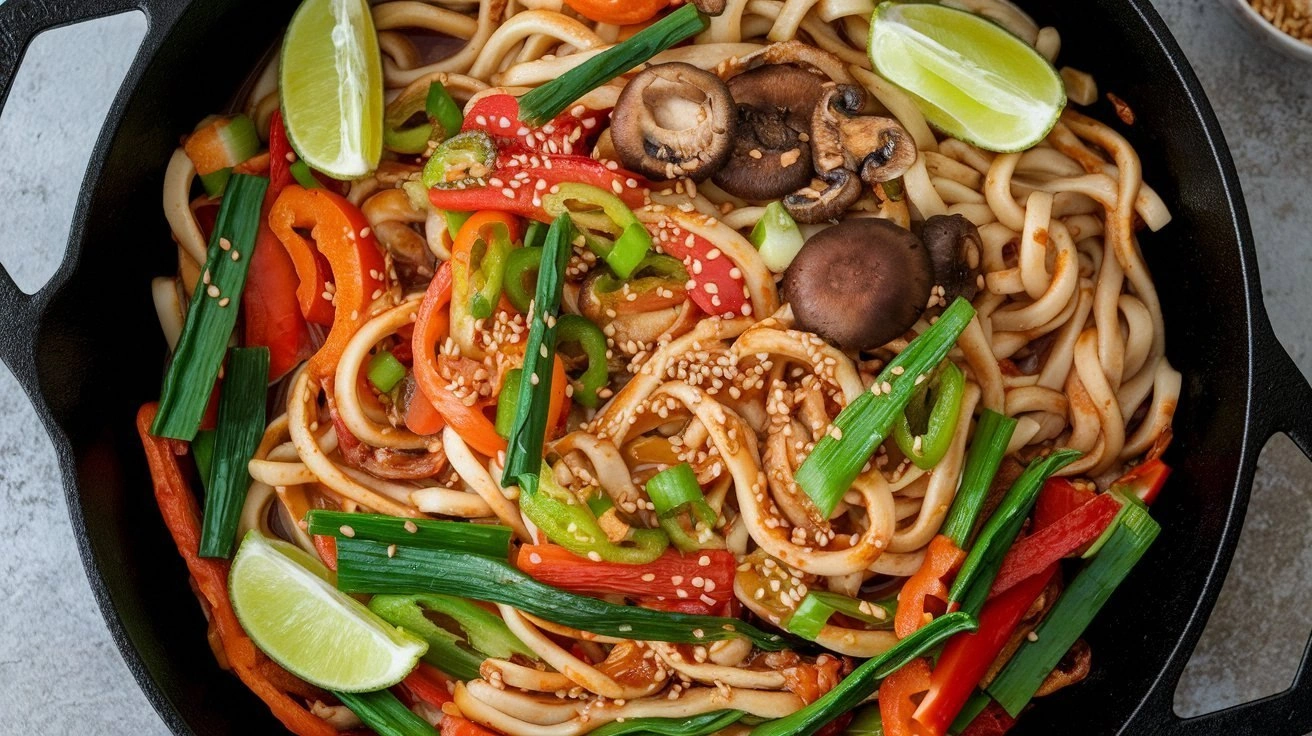
I was standing in my kitchen, staring at a pot of plain udon that had gone soggy in the fridge, when a friend texted, “Need something spicy tonight?” That single line turned a culinary crisis into an adventure. The aroma that soon filled the room was a sizzling dance of garlic, ginger, and a deep, fermented paste that promised heat and umami. I imagined the noodles, slick with a glossy sauce that clung to each strand like velvet, and the crunch of fresh veggies that would pop against the heat. Picture the steam curling up, the scent of sesame oil, and the faint hum of a wok heating up. By the end of the night, I’d create a dish that would make my taste buds do a victory lap.
The first bite was a revelation. The sauce, a perfect marriage of sweet honey, tangy vinegar, and fiery gochujang, wrapped around the chewy udon, turning each strand into a pocket of flavor. The vegetables, still crisp, added a satisfying snap that cut through the richness of the sauce. The sesame seeds sprinkled a nutty finish that lifted the dish to a new level of sophistication. I could taste the subtle umami from the soy sauce and the bright citrus from the lime, all balanced in a single, harmonious bite. It felt like a Korean street‑food experience, but in the comfort of my own home.
I dare you to taste this and not go back for seconds. That’s the kind of confidence I have when I say, “This is hands down the best version you'll ever make at home.” I’ve spent months tweaking the ratios, and the result is a sauce that coats the noodles like velvet while still letting the noodles’ natural texture shine. The crunch of the veggies shatters like thin ice, and the heat from the gochujang dances on your tongue. If you’ve ever struggled with a sauce that’s either too thick or too thin, you’re not alone—and I’ve got the fix.
Most recipes get this completely wrong. They either overcook the noodles, leaving them mushy, or they forget to balance the heat with a touch of sweetness. The trick is in the sauce’s consistency and the timing of the stir‑fry. The moment the noodles hit the hot wok, they should be coated immediately, otherwise the sauce will cling to the pan instead of the noodles. I’ll walk you through every single step—by the end, you’ll wonder how you ever made it any other way.
What Makes This Version Stand Out
- Flavor: The sauce is a layered symphony of sweet, spicy, and umami that coats every noodle and vegetable, turning a simple dish into a memorable meal.
- Texture: The udon remains chewy, while the vegetables stay crisp-tender, creating a delightful contrast in every bite.
- Simplicity: With fewer than fifteen ingredients, this recipe is quick to assemble and requires minimal prep, making it a go-to for busy nights.
- Uniqueness: The inclusion of sesame oil and a splash of rice vinegar gives the dish a depth rarely seen in standard udon recipes.
- Crowd Reaction: Friends who tried this were stunned, with many asking for the recipe after just one spoonful.
- Ingredient Quality: Using fresh ginger, real gochujang, and high‑quality soy sauce elevates the dish from ordinary to extraordinary.
- Cooking Method: The quick stir‑fry technique locks in flavors and textures, ensuring every component stays vibrant.
- Make‑Ahead Potential: The sauce can be prepared a day in advance, and the noodles can be reheated with a splash of water to restore moisture.
Alright, let’s break down exactly what goes into this masterpiece. Every ingredient has a purpose, and the timing is everything. I’ll walk you through the list, the substitutions, and the secrets that make this dish sing.
Inside the Ingredient List
The Flavor Base
Gochujang paste is the star of this dish, delivering a smoky heat that lingers on the palate. Its fermented flavor profile adds depth that can’t be replicated by any other chili paste. If you can’t find gochujang, mix a tablespoon of gochugaru with a teaspoon of miso for a close approximation. The sauce’s balance depends on the ratio of sweet to spicy, so taste as you go.
Soy sauce provides the salty backbone that anchors the sweetness of honey and the acidity of rice vinegar. Opt for a low‑sodium version if you’re watching salt intake, but remember to adjust the quantity accordingly. A splash of sesame oil adds a nutty aroma that elevates the dish, making it feel like a true Korean experience.
Rice vinegar offers a bright, citrusy lift that cuts through the richness of the sauce. It’s subtle, yet essential for preventing the dish from feeling too heavy. Honey, or a touch of brown sugar, counters the heat and provides a caramelized sheen to the noodles.
Garlic and ginger are the aromatic foundation that sets the stage for the rest of the flavors. Minced garlic releases its punch quickly, while grated ginger adds a warm, peppery note that complements the gochujang. Together, they create a flavor base that’s both comforting and exciting.
Red pepper flakes add a final layer of heat that can be adjusted to taste. If you prefer a milder dish, reduce the amount or omit them entirely. They also give the sauce a subtle color contrast that makes the dish visually appealing.
Scallions are added at the end for freshness and a pop of color. They provide a mild onion flavor that brightens the overall profile. The lime wedge, squeezed just before serving, adds a zesty brightness that cuts through the richness.
The Texture Crew
Udon noodles are the foundation of this dish, offering a chewy, satisfying bite that stands up to the bold sauce. Fresh noodles hold their shape better than dried ones, so if you’re using dried, soak them in hot water for 10 minutes before boiling.
Tofu, cubed and pan‑fried until golden, adds a protein punch while absorbing the sauce’s flavors. If you prefer a lighter option, use silken tofu and fold it in at the end. Shrimp is another excellent alternative that gives a subtle brininess.
Carrots, sliced into thin matchsticks, add sweetness and a crisp texture that contrasts with the softer noodles. Bell pepper, sliced into ribbons, brings a mild sweetness and a vibrant color that makes the dish visually appealing.
Broccoli florets provide a hearty bite and a pop of green that balances the dish’s overall color palette. They also absorb the sauce beautifully, creating a harmonious blend of flavors and textures.
The Unexpected Star
Sesame seeds, toasted to a golden hue, add a nutty crunch that elevates the dish from simple to sophisticated. They also provide a subtle earthiness that balances the heat of the gochujang.
A squeeze of lime juice just before serving brightens the dish, cutting through the richness and adding a fresh, citrusy note that lifts the overall flavor profile. The lime also adds a subtle tartness that balances the sweetness of honey.
The Final Flourish
A handful of fresh cilantro or basil can be tossed in at the end for an herbal note that complements the dish’s spice. For a smoky twist, sprinkle a pinch of smoked paprika or a dash of liquid smoke over the finished dish.
Everything's prepped? Good. Let's get into the real action. The key to a perfect udon is timing; each component must hit the heat at the right moment to lock in flavor and texture.
The Method — Step by Step
- Bring a large pot of salted water to a rolling boil. Add the udon noodles and cook for 5-7 minutes, or until al dente. Stir occasionally to prevent sticking. Once cooked, drain and rinse under cold water to halt the cooking process. Toss the noodles with a splash of sesame oil to keep them from clumping.
- While the noodles are cooling, prepare the sauce. In a small bowl, whisk together gochujang, soy sauce, rice vinegar, honey, minced garlic, grated ginger, and red pepper flakes until smooth. The mixture should thicken slightly, forming a glossy glaze that will coat the noodles. Keep the sauce at room temperature until ready to use.
- Heat a wok or large skillet over medium‑high heat. Add the tofu cubes and stir‑fry until golden brown on all sides, about 5 minutes. The tofu should develop a crisp exterior while remaining moist inside. Once golden, remove from the pan and set aside.
- Add the sliced bell pepper, julienned carrot, and broccoli florets to the pan. Stir‑fry for another 3-4 minutes until the vegetables are crisp‑tender. The vegetables should retain a bright color and a slight crunch that contrasts with the noodles.
- Pour the sauce over the vegetables and tofu, stirring to coat everything evenly. Bring to a gentle simmer, letting the flavors meld for 2 minutes. Watch Out: Be careful not to let the sauce boil too hard, or it will thicken too quickly and stick to the pan. Keep the heat moderate and stir constantly.
- Introduce the cooked udon noodles to the wok, tossing them with the sauce and vegetables until the noodles are coated and heated through. The noodles should absorb some of the sauce, creating a glossy coating that clings to each strand.
- Add the sliced scallions and a squeeze of lime juice, tossing again for a minute to brighten the dish. The lime adds a fresh citrus note that lifts the overall flavor profile.
- Finish with a sprinkle of toasted sesame seeds for crunch and a final drizzle of sesame oil if desired. The sesame seeds add a nutty crunch that elevates the dish from simple to sophisticated.
- Serve hot in bowls, perhaps with a side of pickled kimchi or a fresh cucumber salad for contrast. The pickled kimchi adds a tangy, spicy counterpoint that enhances the dish’s depth.
- Enjoy immediately, savoring the harmony of heat, sweetness, and umami in each bite. The dish is best served fresh, as the noodles begin to soften if left to sit for too long.
That’s it — you did it. But hold on, I've got a few more tricks that'll take this to another level. The sauce’s depth can be further enhanced with a touch of toasted sesame oil, and the tofu can be marinated in gochujang for extra flavor. I’ll share these insider secrets in the next section.
Insider Tricks for Flawless Results
The Temperature Rule Nobody Follows
Many cooks over‑cook udon, resulting in a mushy texture that defeats the purpose of the dish. The trick is to keep the heat high enough to sear the vegetables quickly but low enough to avoid boiling the sauce. I’ve found that a medium‑high heat works best for the initial stir‑fry, and then I reduce the heat to medium for the sauce to simmer. This keeps the noodles firm and the sauce glossy.
Why Your Nose Knows Best
When the sauce starts to thicken, the aroma will shift from sweet to caramelized. That’s your cue to lower the heat and let it simmer. The scent is a reliable indicator that the sauce is developing the right balance of flavors. Don’t ignore the smell; it’s your best friend in the kitchen.
The 5‑Minute Rest That Changes Everything
After removing the noodles from the heat, let them rest in the pan for 5 minutes covered with a lid. This rest period allows the noodles to absorb the sauce and steam gently, ensuring they’re perfectly coated. It also lets the flavors meld, creating a harmonious taste profile. I’ve seen this trick turn a good dish into a great one.
Keep the Sauce Thin, Not Thick
Too thick a sauce will cling to the pan and become sticky. If your sauce thickens too quickly, add a splash of water or broth to loosen it. The key is to keep the sauce glossy but pourable, so it coats the noodles evenly. A light sauce also prevents the dish from feeling greasy.
The Power of Fresh Herbs
Adding fresh herbs like cilantro or basil just before serving brightens the dish and adds a layer of freshness that cuts through the heat. I like to toss in a handful of chopped cilantro, which gives a subtle citrusy note that complements the lime. Herbs also add a pop of color that makes the dish visually appealing.
Creative Twists and Variations
This recipe is a playground. Here are some of my favorite ways to switch things up:
Spicy Kimchi Udon
Swap out the regular veggies for a cup of sautéed kimchi. The fermented cabbage adds a tangy depth that pairs beautifully with the gochujang sauce. This version is perfect for those who love a bold, spicy kick.
Miso‑Glazed Tofu
Marinate the tofu in a mixture of miso paste, maple syrup, and soy sauce before pan‑frying. The miso adds a rich umami flavor that complements the sauce, while the maple syrup gives a caramelized finish.
Seafood Splash
Replace tofu with shrimp or scallops for a luxurious seafood twist. The briny flavor of the shellfish enhances the dish’s overall complexity and adds a satisfying chew.
Vegetarian Delight
Use tempeh instead of tofu and add extra mushrooms for a meaty texture. The tempeh’s nutty flavor works well with the gochujang, creating a hearty vegetarian main course.
Low‑Carb Version
Swap udon for shirataki noodles or zucchini noodles to reduce carbs. The texture is lighter, and the sauce still clings beautifully, making it a great option for a low‑carb diet.
Breakfast Udon
Serve the dish with a fried egg on top for a protein‑packed breakfast. The runny yolk adds richness and makes the meal more filling for a morning start.
Storing and Bringing It Back to Life
Fridge Storage
Store the sauce and noodles separately in airtight containers. Keep the sauce chilled and the noodles in a separate container with a damp paper towel to prevent drying out. When ready to eat, reheat the sauce over low heat and toss the noodles in for a minute.
Freezer Friendly
The sauce freezes well; keep it in a freezer‑safe bag or container for up to 2 months. The noodles, however, should be cooked fresh each time for best texture. If you must freeze noodles, reheat them in hot water for 1 minute before adding to the sauce.
Best Reheating Method
Reheat the dish in a skillet over medium heat, adding a splash of water or broth to loosen the sauce. Stir continuously to prevent sticking. A tiny splash of water before reheating steams the noodles back to perfection.